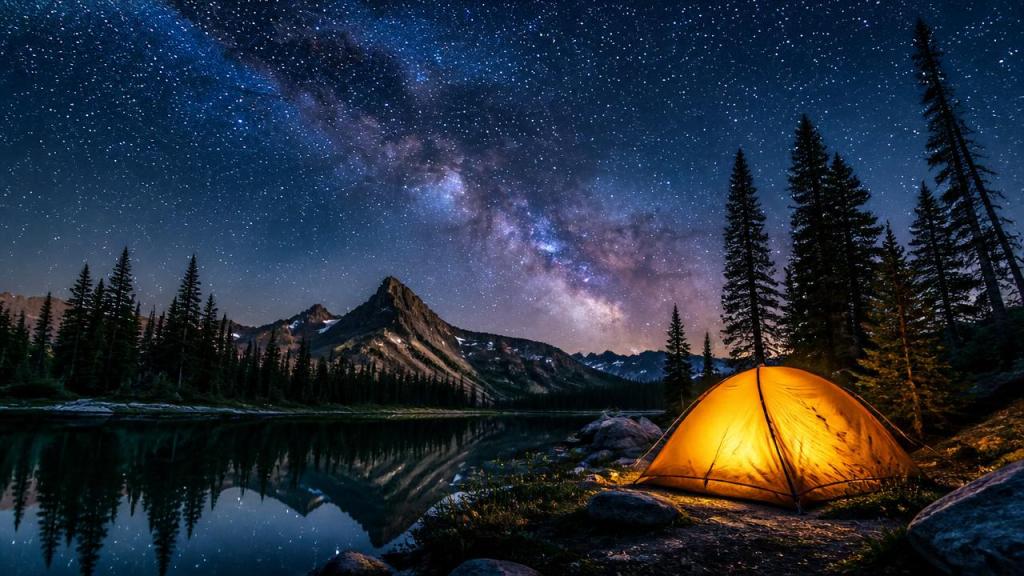
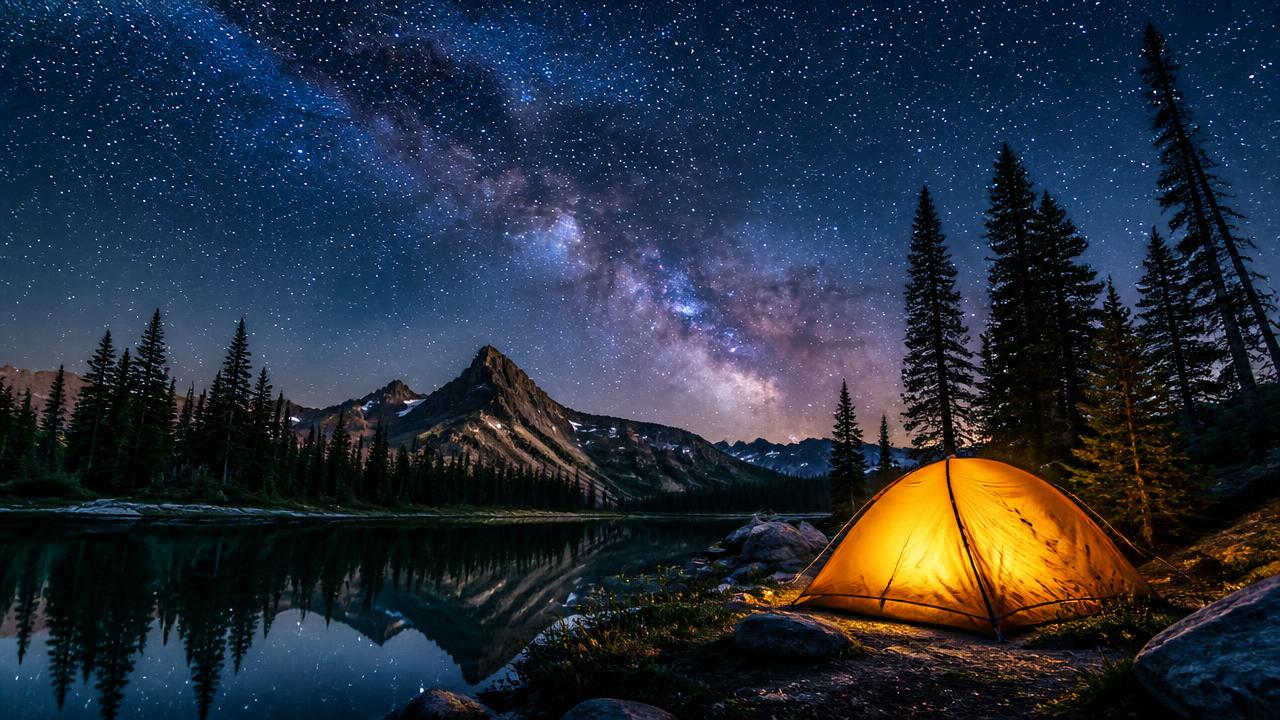
There’s a moment on every great campout when the fire dies down, the conversation fades, and someone looks up. If you’re far enough from city lights, what you see can stop you cold: the Milky Way stretched across the sky like smoke from the first campfire ever lit.
Pick a dark sky
Light pollution is the enemy. Aim for a designated Dark Sky Park or any national forest at least an hour from a major town. New moon weekends are gold — a bright moon washes out faint stars just like city glow does.
What to bring
Skip the telescope on your first trip. Pack a red-light headlamp (white light kills your night vision for 20 minutes), a star chart app used on night mode, a warm layer, and a pad to lie flat on. That’s it. Your eyes are the instrument.
What to look for
Start with the easy wins: the Big Dipper, Cassiopeia’s W, and the bright band of the Milky Way rising after midnight in summer. Watch for satellites sliding silently across the sky — you’ll spot a dozen without trying. If you’re lucky, a meteor will seal the deal.
The best part of stargazing from camp? When your neck gets tired, your sleeping bag is ten feet away. Set an alarm for 2 a.m. once in your life. You will not regret it.


Leave a comment